MULTIPLE AWARD WINNER, AUTHOR,, CORPORATE MC, MENTOR, PROMOTER & AMBASSADOR FOR PEACE -UNIVERSAL PEACE FEDERATION. WE PROMOTE THE SUCCESS STORIES OF AFRICANS & CARIBBEANS AROUND THE WORLD. CONTACT US NOW ON +447882809005
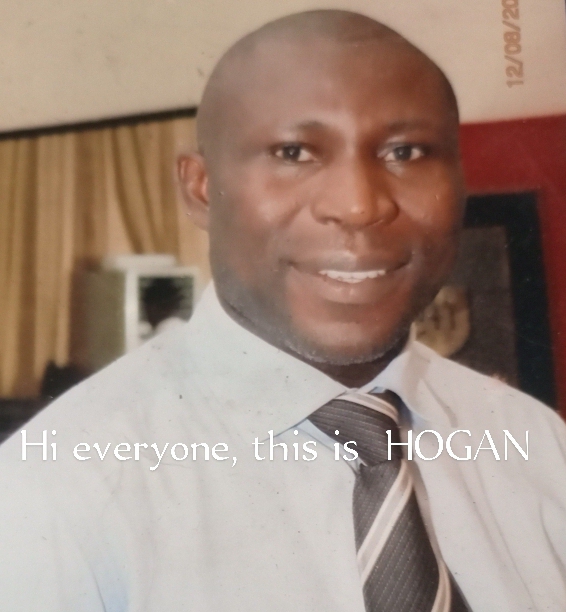
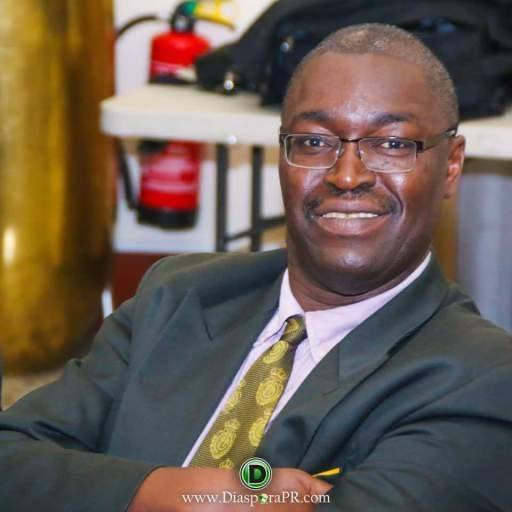
Holyns Hogan is a popular Efik prince of known global repute in literature, scholarship and social activisms-. HOGAN is Ikot Otu and Eyamba Royal Houses of Obutong and Iboku Utan clans of Calabar Municipal and South LGAs of Cross River State, respectively.
He is a well-read, widely-travelled, multiple award winner and published poet, dramaturge, writer, media, film, theatre and literary communications consultant, critic, university CES Lecturer, former senior lecturer/pioneer HOD Arts, Culture and Printing Technology at the Cross River State Management Development Institute (MDI) and HOD Arts and Social Science at the Joint Universities Preliminary Admissions Board (JUPEB CRUTECH) Centre.
HOGAN is a double honourary chieftaincy titles holder of OtuEkong and Utueninkañ ufök. He has over a thousand on/offline publications of which over fifteen are iin reputed academic journals and books at home and abroad. He is a certified scholar at LAP and Cambridge Academic Publishing, UK, as well as the African Council for Communication Education (ACCE). He featured as Peter in the first African-Europea Christian Film/Passion For the Cross titled-“Jesus Speaks Efik” and formerly featured as dialogue director in Nollywood films.
HOGAN was theformer CRS Team leader in the World Bank- FGN- MDG- FLE Project and State NACFS Intel. Bureau. He is married to a pretty wife, with three lovely children, loves promoting arts and culture, Efik oral heritage serving humanity, and is currently the head of Ufib Efik International Movement and CEO at HOGIFT KONZULTZ AND EVENTS.
I am Ndidi Nkwopara, Creative Producer @Soaring With Didi.
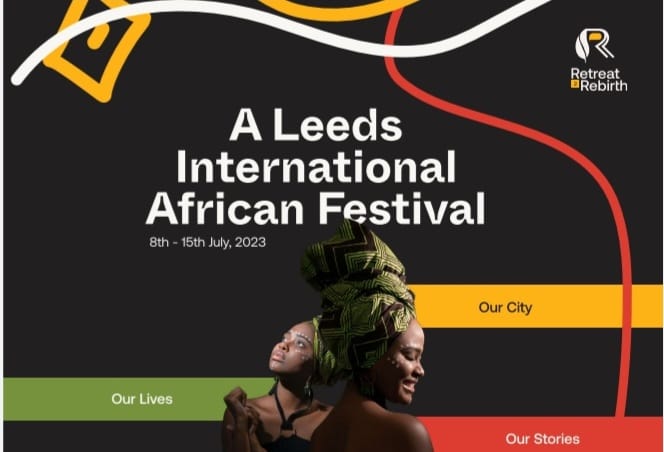
I am thrilled to announce that Soaring With Didi will be producing the first Leeds International African Festival as part of the Leeds 2023 Year of Culture.
2023 will be a year of Culture like no other. In collaboration with our major partners, we are excited to bring together the African communities in Leeds to shout about their heritage and let their culture loose through african arts exhibition, cooking competitions, music & dance performances within the week of 8th-15th of July!
If you are an African living in Leeds, be a part of this!
We are proud to be a media partner of THE LEEDS INTERNATIONAL AFRICAN FESTIVAL 2023. Watch this space for all the updates and content including interviews with the amazing team,
THE SOUL OF ANY COMMUNITY LIVES IN THE HEART OF ITS PEOPLE
AFRICAN CALABASH RESTAURANT, GREENWICH, LONDON ON THE TONY TOKUNBO FERNANDEZ SHOW- WATCH THIS SPACE . CLICK ON THE LINK BELOW TO FIND OUT MORE ABOUT THE CALABASH RESTAURANT AND BAR
ABOUT THE CALABASH RESTAURANT AND BAR
The Calabash Restaurant & Bar is the finest African dining and relaxation point with amazing interiors that creates an unfathomable African experience. Situated at the heart of the Greenwich Peninsula, ours is a family-friendly, warm and welcoming restaurant. We offer an authentic full African menu with African beers – sizzling hot food, fast service, and great ambience!
Menu
We offer the widest variety of mouth-watering African delicacies in London for you to savour and be delighted by. Ranging from properly prepared soup to spicy WAAKYE expect your culinary senses to be greatly rewarded.
Tasty African cuisine
Get the delight of eating your favourite dish just as mama makes it. If you enjoy African food or you are from Africa, this is the restaurant to try out while in London. Are you on holiday and looking for a place to dine? With our African dishes cooked to perfection, you will not regret choosing to dine with us. This food is the closest you will get to home whilst being in London – it reminds you of home with every bite.
We serve large portions, full of flavour, of delicious food from all over Africa. From Jollof Rice of Sierra Leone, kenkey of Ghana to cow skin CAfricanu nd gizzards of Nigeria and delicious sauce with injera of Ethiopia, and lots more. Our brilliant chefs put African food on the map.
Are you one of the curious diners? We have a number of exciting dishes to satisfy your love for new food experiences. Our amazing chefs are always ready to come out of the kitchen and explain their dishes to you because we know our food is deliciously different from what you are normally accustomed to in London.
Fantastic Service
Our staff are trained to serve you quicker than you can imagine, with a friendly attitude and thorough knowledge of the menu. They are always happy to provide help and recommendations with the menu.
Our highly trained chefs have a lot of experience in creating authentic African cuisine that is just like you recognise from home. If you are new to African cuisine and don’t know where to start, our chefs are always happy to leave the kitchen to let you know where to start.
Perfect Location
Situated in the Greenwich Peninsula, The Calabash Restaurant & Bar is at the heart of everything up and coming. Found in a beautiful location, surrounded by parks, art exhibitions, shops and music venues, we couldn’t be more excited about where we are. Our location is the perfect spot for anyone to discover us, or for someone to go when they need a break for all the exploring they’re doing in the local area.
See What Our Customers Say
“When I was exploring London, I wanted food that felt familiar to me. The Calabash Restaurant & Bar provided that – and better!”
“Great food, amazing people, quick service!”
“I’d never tried African food before, but The Calabash Restaurant & Bar was a great introduction to it. The food was amazing and everyone was so helpful.”
The BIB ‘n’ Calabash Restaurant & Bar is the place to enjoy your favourite aromatic-spicy African dishes and beer with family and friends
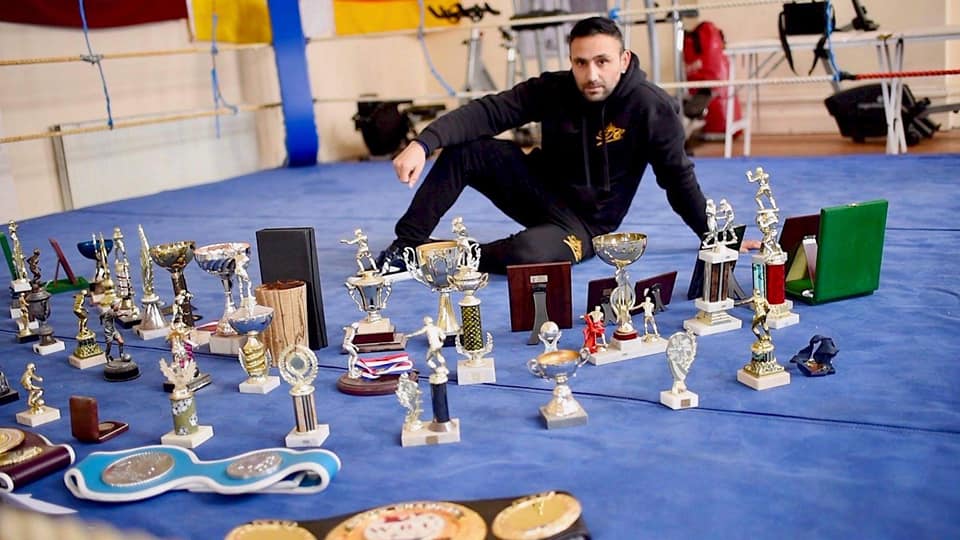
Tasif Khan is a British-born Pakistani super flyweight professional boxer.
Born in Bradford, Khan found a passion for boxing at the age of 10. But Khan pursued a path of teaching in a primary school as a day job. After much reflection, Khan decided to walk away for a crack at a professional career in boxing.
Prior to turning professional, he built an impressive Amateur boxing record, becoming the North of England Champion in 2004, the National England finalist in 2005, and held the Yorkshire and Humber Champion title for six years. Turning professional, Khan rose through the ranks and also fought on the undercard of the Amir Khan v Paul Mckloskey boxing bout in Manchester MEN arena.
Khan is now the Superflyweight World Champion (World Boxing Union), Superflyweight World Champion (Global Boxing Union), Bantamweight World Champion (World Boxing Confederation) and the International Masters Champion.
An intensely driven boxer, Khan is determined to leave a profound legacy for all to see.
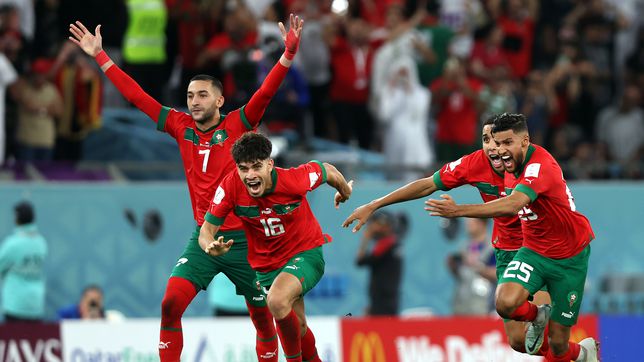
Morocco have booked their place in the World Cup’s quarter-finals after a sensational penalty shootout win against Spain, becoming the first Arab country to ever reach the tournament’s last eight.
The Atlas Lions’ Spanish-born superstar wing-back Achraf Hakimi brought the curtain down on Tuesday’s last-16 clash at the Education City Stadium, notching the winner from the spot to make it 3-0 on penalties and sending the tens of thousands of raucous Moroccan fans in attendance into rapture.
Ayo is a London-based journalist who has worked as a magazine and newspaper editor for the last 31 years. He was the founding editor of Nigerian Watch, the UK-based paper for the Nigerian community in the UK. He is also the author of two books on Nigeria. Fuelling the Delta Fires is an expose which reveals the depth of the challenges in the Niger Delta, while Black Ladder is a narrative about the life of a Nigerian immigrant in the UK. In addition, Ayo is a columnist for several publishing houses in both Nigeria and the UK.
Ayo has a history degree from the University of Ibadan and I did my post-graduate studies in journalism at the University of Westminster. He is the current president of Ondo Union UK, the chair of Uncelebrated Nigerian Awards UK and was the chairman of the Nigerian Centenary Awards UK organising committee.
Expressing Life and Nature in Wild and Free A Review of Remilekun Jaiyeola’s Wild and Free By Folorunsho Moshood
After the melodious vamp, the opening lyrics of Black Men United’s 1994 single song entitled ‘You Will Know’ readily come to mind: When I was a young boy / I had visions of fame / They grew wild / They were free / They were blessed with my name. Black Men United was a collaboration of African-American R&B neo soul and soul music artists.
The song was written by a young D’Angelo along with his brother, Luther. Reading Remilekun Jaiyeola’s ‘Wild and Free’ reminds this reviewer of that opening lyrics of ‘You Will Know’. Introducing the book, the poet writes, ‘Wild and Free’ is a collection of poems about life and nature.
There are poems about the joys of being wild, and poems about the freedom of being free.
The book was inspired by the feeling that we all have deep within us—that there’s something wild and free in our hearts seeking expression’. In the case of Black Men United, what grew wild and free were the visions, and the artists expressed them through a single song, ‘You Will Know’.
This should provoke the reader to know what will grow wild and free in people’s hearts that the poet expresses through ‘Wild and Free’, a collection of forty-eight poems written by Remilekun Jaiyeola and published in 2022 by New Touch International Limited, 1A Pemberton Road, Bradford, United Kingdom.
From ‘Firework’ to ‘I Am Powerful’, the poet treats us to chewable bones of poetry about nature, life and how life should be lived. These ultimately revolved around the themes of confidence, struggle, pleasure, pain, beauty, peace, loneliness, freedom, bondage, love, care, hardship, friendship, Legacy, regret, resilience etc.
The forty-eight poems that will transport the reader to the poetry land where poems enliven the spirit are as follows; ‘Firework’, ‘Falling Apart’, ‘I Let Them Out’, ‘Ask Yourself’, ‘When I was Young’, ‘Nothing is Hers’, ‘I’ll Find My Way’, ‘Beauty’, ‘I Don’t Know’, ‘Walk in Nature’, ‘A New Way Home’, ‘If I could Fly’, ‘Worried’, ‘See the World’, ‘Possibilities’, ‘Golden Hour’, ‘Love and Hope’, ‘What Do You See?’, ‘Ask God’, ‘A Gift for God’, ‘Most Beautiful’, ‘Left Behind’, ‘It’s Everywhere’, ‘I Wish’, ‘To Be In Love’, ‘My Friend’, ‘Apart’, ‘Overcome’, ‘I Feel Like’, ‘Regret’, ‘Fear And The Dark’, ‘I Didn’t Know’, ‘Wild and Free’, ‘A Place of Wonder’, ‘The Goodness of Your Voice’,
‘Finding Joy’, ‘I Believe in Fate’, ‘One Thing’, ‘Where I Feel Safe’, ‘How to be Free’, ‘Stand Still’, ‘Looking Forward’, ‘She Did It All’, ‘I Am Myself’, ‘Lost In The Dark’, ‘I am not Free’, ‘What do you want?’ And ‘I am Powerful’.
It is worthy to know that some themes in this beautiful collection are used antithetically to bring out contradictory effects. Two poems are perfect examples, ‘Wild and Free’ and ‘I Am Not Free’: In ‘Wild and Free’, the poet expresses freedom. The poem goes thus: Outside, nature is wild and free / It’s the perfect place to be / The wind is blowing, / the trees are rustling / I can hear birds singing, / telling me something. / When I look at nature / it makes me feel / I’m a part of something / bigger than myself / for I am wild and free.
But in ‘I Am Not Free’, the poet expresses bondage, which is an antithesis of freedom. The poem goes thus: I am not free, / I am trapped in a cage. / The bars are made of fear, / And their shape is dread./ I wish I could run away, / But there is no way out. / I’ve been here for so long, / And I don’t know what to say. / I’ve been here for so long, / I’m just not sure how to stay. There are some poems that have similar themes in context. A careful analysis of these poems shows that they can easily flow into one another. Two poems are sacrosanct in this regard, ‘How To Be Free’ and ‘Looking Forward’. In ‘How To Be Free’, the poet shows his failure on how to be free.
The poem goes thus: I wish I knew how to be free. / I wish I knew how to let go / of the things that keep me stuck, / and make me feel like a failure, / I wish I knew how to / Worry less about other’s opinion / And seek how to be free / Living to free myself / From the dangers of human / Who also are in a quest / To get freedom at my expense.
But in ‘Looking Forward’, the fear of failure that the poet expresses in ‘How To Be Free’ becomes a beacon of hope. It goes thus: I’m looking forward to the day / When my heart is finally free— / When I can walk out the door, / And never look back. / I’m looking forward to the day / When I can finally say goodbye— / To all the things that have held me back, / And keep me locked inside. / Today I break free / From shackles / that won’t let me be. The poet in this collection features some poems that pose rhetorical questions to the reader. Two of such poems, ‘What Do You See?’ and ‘What Do You Want?’ are hereby examined: In ‘What Do You See?’, the poet brings out another form of contradictory themes using rhetorical questions: What do you see / when you close your eyes? / Is it a daydream, / or a nightmare? Do you see the past, / or the future? / Do you see your heart beating, / or your blood flowing? / Do you see peace and quiet, / or chaos and strife? / Do you see yourself in love, / or alone and afraid? It is all about choice-making. The antithetical pairs are Daydream and Nightmare; Past and Future; Peace and Chaos; Love and Alone.
In ‘What Do You Want?’, the poet is so direct in asking the reader to make his or her choice using the same style in ‘What Do You See?’. The poem goes thus: What are you going to do with your life? / Are you going to make art? / Or are you going to make money? / Are you going to take risks? / or play it safe? / Do you want to travel the world? / or stay close to home? / Do you want to make something beautiful? / or just make a buck? /The choice is yours / What do you want? The pairs of antithetical words in What Do You Want are Art (Fame) and Money (Fortune); Risk (Danger) and Safe; Travel and Stay at home. Other poems of rhetorical questions are Worried, A New Way Home, Beauty and Ask Yourself.
A literary device that is very common in this collection is enjambment. The reader will see a sentence continues into two or more lines in more than two-third of the poems. Examples of some of the poems and their enjambments are ‘Firework’ (A flash of colour in an otherwise dull night), ‘Falling Apart’ (The world is falling apart, and I don’t know what to do; I feel like my heart is aching, and I can’t bear it another moment; The darkness has come for me, and I don’t know how to fight it; It seems like the only thing is to give in to the pain) and ‘I Let Them Out’ (There is an ocean in the center of me; But I know it’s there. It’s filled with all my dreams and wishes and hopes; I let them out, they’re reflected at me).
Other literary devices that the poet employs to make emphasis or create sensory effects are hyperbole, imagery and metaphors as well as oxymoron. These literary devices are more pronounced in poems that showcase the beauty of nature such as ‘Walk In Nature’ and ‘Beauty’.
In all, the language is lucid and the style is free verse with two or three poems featuring rhyming schemes. There are some spelling errors such as ‘Shackels’ instead of ‘Shackles’ in ‘Looking Forward’ and ‘Center’ (American) instead of ‘Centre’ (British). In ‘What Do You See?’, the word ‘Quiet’ should have been ‘Quietness’ in the context it is used. The poem, ‘I Wish’, shows lack of consistency in the use of tenses: The poem goes thus: I wish there was a land / Where the sun always shone, / And the flowers always grew. / Where the air was warm and sweet, / And the people were kind. / Where the sky is a rainbow / And the grass glows in the moonlight / Where all fantasies come true, / And hearts are full of love and light. The poem can be better written in a single tense.
In Remilekun Jaiyeola’s Wild and Free, the reader will know that life and nature grow wild and free in people’s hearts – they inspire them to make life-long choices. The people include the poet and his audience. Most poems in this collection are lyrical and easy to commit to memory.
Above all, some of the poems answer the questions of life, struggle and death and point to the way life should be lived. I recommend this beautiful collection to all and sundry especially poetry lovers.





 TONY TOKUNBO ETEKA FERNANDEZ