The Black Studies Movement in Britain By Dr. Kehinde Andrews

In September 2017 students will enrol on the first Black Studies undergraduate degreeprogramme in Europe at Birmingham City University (BCU). The course is by no means the first to address any of the issues of the African Diaspora. African and Caribbean Studies have a history in the UK and work from Black scholars has filtered into a variety of degree programmes over time. Black Studies, however, offers more than a focus on different parts of the Diaspora; it represents a shift in the way that knowledge is used and how it connects to Black communities.

There are few problems of racism that manifest worse in the UK than the US, but the absence of Black voices from the academy is one of them. There is a crisis of representation with only 1 percent of academic staff in Britain being Black. The problem is even worse in the higher levels of the profession where there are only 60 Black full professors across all subjects in the entire country. The university sector is overwhelmingly white and as a result you are lucky to find one Black member of staff in a department, let alone enough to talk about starting a Black Studies programme. The main reason we have been able to launch a degree at BCU is because we have six full time Black academics in the same department. This is a complete aberration in the landscape of British higher education and it was not achieved by accident.

Black Studies has been developing in Britain since my colleague, Dr. Lisa Palmer, and I organised the first Blackness in Britain conference in 2013. Frustrated at the lack of space for Black Studies in the academy we aimed to bring together scholars working in the area. We expected a small turnout, but were overwhelmed by the response with over 170 people registering and 40 papers delivered for the one day event. The momentum from that first conference led to establishing the Black Studies Association and organising a second, two day Blackness in Britain Conference last year, keynoted by Professors Patricia Hill Collins, Barnor Hesse, and Gus John. We have also published an edited collection Blackness in Britain (Routledge), and have a book seriesof the same name with Rowman and Littlefield International. Building the research base for Black Studies in the UK was how we managed to develop the team of Black academics who are a central cluster in the new Centre for Critical Social Research at BCU.

The degree programme is just the latest step that has developed out of the hard work of creating the basis for Black Studies. This is important because the point of the research and the degree is not just to bring Black faces into white spaces, but to attempt to develop the discipline in a way that transforms the shape of those spaces. To understand why Black Studies is so distinct and important it is necessary to re-engage with the history of the discipline.

Black Studies did not just easily emerge in the US; there was a process of struggle that took widespread and community support, excellently chronicled in the new documentary Agents of Change. At San Francisco State University, in 1968 there was afour month long student led strike to pressure the university; whilst protesting students at Cornel, in 1969, armed themselves in self-defence during their occupation of Willard Straight Hall. Black Studies was demanded because, whilst the universities opened their doors to Black students, they failed to change their racist and exclusionary curricular.

British universities are experiencing the same urge for change from disgruntled students of colour. Massification of higher education means that, whereas in the sixties less than 5 percent of the population went to university, over 40 percent stay on for a degree today. This includes a large number of Black students, who remain underrepresented at the more ‘prestigious’ universities. The narrow curriculum has led to the emergence of student led movements such as ‘Why is My Curriculum White?’, and ‘Rhodes Must Fall’ which challenges the presence of the colonial white supremacist Cecil Rhodes at the University of Oxford. It has long past time for change in British higher education.

The challenge for Black Studies in Britain is to ensure that the change that occurs is significant, not piecemeal and tokenistic. There is now a race equality charter mark that universities can sign up for in order to burnish their diversity credentials. The purposes of Black Studies must go beyond making universities seem progressive. The degree emerges at a time when the cost of a university education has gone from being free, to costing £9000 a year. The system of maintenance grants for the poorest students has now been abolished and replaced with loans condemning students to a millstone of debt. We can never be satisfied broadening a curriculum in the current neo-liberal nightmare of university provision. Unfortunately universities are not vehicles for social change; they are not the solution to the problems facing Black communities. In fact, they represent part of a skewed schooling system that entrenches racial and class inequality.

Therefore, Black Studies is important because, in its more critical incarnations, it offers a blueprint for how to use the university to improve the conditions in Black communities. In his 1972 article ‘The Battle for Black Studies’, Nathan Hare explains that:

[. . .] most crucial to black studies, black education, aside from its ideology of liberation, would be the community component of its methodology. This was designed to wed Black communities, heretofore excluded, to the educational process, to transform the black community.[1]

Black Studies offers the possibility of transforming the relationship of between the university and the community. The ivory tower of the university has often treated Black communities as deviant subcultures to be studied. It is no surprise that during the early days of my doctoral research I was accused by some in my community of being a ‘spy’ because of my role. The transformative potential of Black Studies lies in the wider community being so instrumental in the battle to see it established in the first place. Hopefully, by embedding the community component into the discipline it can serve, rather than exploit or ignore, community needs.

It is for this reason that one of the key strands running through our Black Studies degree is that the students will have to engage with communities off campus. In the first year they are introduced to Black sociologists and ethnographic methods of exploring inequalities in the city. In the second, they have to do work placement in a public, private or voluntary sector organisation that is working to improve the lives of Black communities. By the third year they must design their own Black Studies project that again directly engages in work in Black communities. Alongside this, the students will be taught a range of methodologies that directly engage with activism, organisations, and practice.

The key marker of distinctiveness in Black Studies is the politics of Blackness that underpins the degree. Blackness is not just about the recognition of people of African ancestry, it is a call to take responsibility for the conditions that we face across the Diaspora. Black struggles and experiences from across the globe are wedded across the interdisciplinary degree programme to give context for situations facing people in Britain. There is no pretence to political neutrality in Black Studies, the goal is to discover what Abdul Alkalimat called ‘the science of liberation’. By this he meant that academics should not simply analyse the problems, but actually develop the tools and methods to bring about freedom, justice, and equality. In order to do this is means making organic connections outside the university and never falling into the trap of becoming institutionalized in a system of higher education characterized by neo-liberal thinking. Audre Lorde famously said that the ‘masters tools will never dismantle the masters house’. Everything, including Black Studies, that is funded by a university utilises the master’s tools by its very existence. However, if Black Studies is connected to movements for change outside of the university then it may just be possible to use the ‘Master’s tools’ to assist in the struggle that can dismantle the house, to colonise a part of the university and put the resources to the wider use of Black communities.

Black Education for Liberation’ is the theme of the next Black Studies conference at BCU, which will take place in September 2017. We aim to build an international, intersectional space, which includes academics, activists, practitioners, and the wider public in order to play our role in improving the conditions facing the African Diaspora. In doing this we are keen to build networks and learn from what has gone before. This is an open call to anyone who wants to be involved. Black Studies is long overdue in Britain, but now that it is here we want to change the nature, not just the face, of the academy.

[1] Nathan Hare, “The Battle for Black Studies,” The Black Scholar 3, no. 9 (1972): 33.

kss

Dr. Kehinde Andrews is Associate Professor of Sociology at Birmingham City University. He recently co-edited Blackness in Britain (2016) and is working on his next book, The Politics of Black Radicalism. His first book was Resisting Racism: Race, Inequality and the Black Supplementary School Movement (2013). Kehinde is director of the Centre for Critical Social Research, founder of the Organisation of Black Unity, and co-chair of the Black Studies Association.

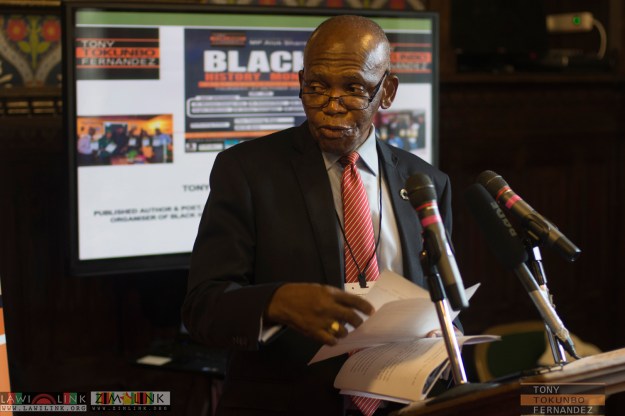
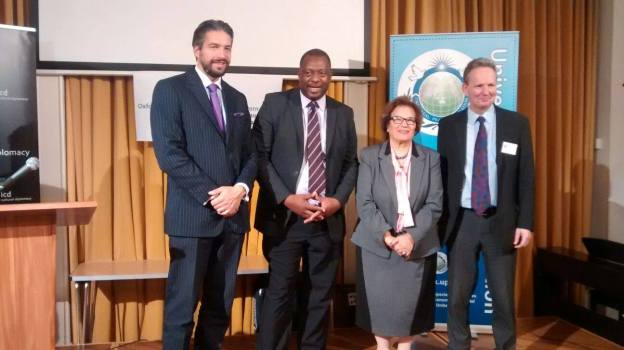
HUMBLED TO BE A SPEAKER AT INTERNATIONAL SYMPOSIUM ON CULTURAL DIPLOMACY IN THE COMMONWEALTH 2016

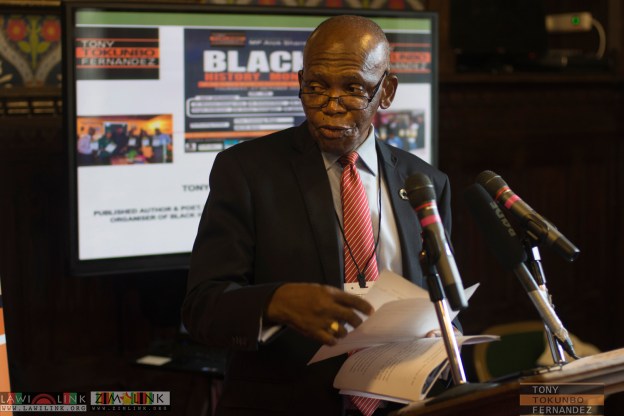
I was humbled to be a Keynote Speaker at THE INTERNATIONAL SYMPOSIUM ON CULTURAL DIPLOMACY IN THE COMMONWEALTH 2016, put together by The INTERNATIONAL INSTITUTE FOR CULTURAL DIPLOMACY, BERLIN in conjunction with Universal Peace Federation – UK.

My Topic was “CELEBRATING BLACK HISTORY MONTH – A COMMONWEALTH CASE STUDY OF CULTURAL DIPLOMACY IN PRACTICE”

Special thanks to Mr Robin Marsh and Margaret Ali for inviting me as one of THE KEYNOTE SPEAKERS
THE ANNUAL CONFERENCE ON CULTURAL DIPLOMACY IN THE COMMONWEALTH was simply amazing

The Universal Peace Federation – UK continue to set the pace with so much positive work

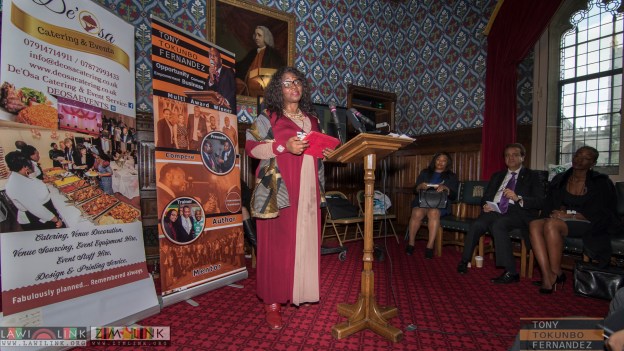
Also watch this space for FINAL UPDATES on THE BLACK HISTORY MONTH CELEBRATIONS , I will be organising at The UK HOUSE OF PARLIAMENT for The fourth year in a row which takes place in less than two weeks

I ALSO PROVIDE THE FOLLOWING SERVICES BELOW

MC Hosting for corporate functions, business expos and network seminars

Emotional Well being, Creative confidence and Bespoke educational modules as part of Youth Empowerment projects/programmes & initiatives in Africa

Customised social media services for Campaigns, Entrepreneurs, Start up businesses, and Social Events across various Social media channels

Motivational Talks for Schools, Universities and Community groups
Talks and Video Presentations on themes related to West African History and Black History

CONTACT US TODAY ON +447882809005 TO MAKE A BOOKING, OR DROP US AN EMAIL : afripoet@gmail.com
T.T.F

13

HUMBLED TO BE A SPEAKER AT THE ANNUAL CONFERENCE IN CULTURAL DIPLOMACY IN THE COMMONWEALTH, TOMORROW, THURSDAY 13TH OCTOBER

Dear Family and Friends,

I am humbled to have been invited by THE UNIVERSAL PEACE FEDERATION and THE INSTITUTE FOR CULTURAL DIPLOMACY as one of THE SPEAKERS at THE ANNUAL CONFERENCE IN CULTURAL DIPLOMACY IN THE COMMONWEALTH taking place this week

The title of my talk, tomorrow -(WEDNESDAY THE 12TH OF OCTOBER) will be themed “Celebrating Black History Month”

Speakers during the symposium will include leading politicians, diplomats, governmental officials, senior academics, journalists, celebrated artists and Commonwealth delegates

Also watch this space for FINAL UPDATES on THE BLACK HISTORY MONTH CELEBRATIONS , I will be organising at The UK HOUSE OF PARLIAMENT for The fourth year in a row which takes place in two weeks time

I ALSO PROVIDE THE FOLLOWING SERVICES BELOW

MC Hosting for corporate functions, business expos and network seminars

Emotional Well being, Creative confidence and Bespoke educational modules as part of Youth Empowerment projects/programmes & initiatives in Africa

Customised social media services for Campaigns, Entrepreneurs, Start up businesses, and Social Events across various Social media channels

Motivational Talks for Schools, Universities and Community groups

Talks and Video Presentations on themes related to West African History and Black History

CONTACT US TODAY ON +447882809005 TO MAKE A BOOKING, OR DROP US AN EMAIL : afripoet@gmail.com
T.T.F


yo

THE ANNUAL CONFERENCE ON CULTURAL DIPLOMACY IN THE COMMONWEALTH 2 TAKES PLACE IN LONDON – OCT 12TH-14TH, 2016

Universal Peace Federation (UPF) and Institute of Cultural Diplomacy (ICD) Conference
Conference Venue 43 Lancaster Gate, London, W2 3NA

Cultural Diplomacy in the Commonwealth 2016
“Cultural Diplomacy as a Means to Build Bridges between the Commonwealth and the World”
(London; October 12th – 14th, 2016)
Held Parallel to the 60th BFI London Film Festival 2016)

Programme: http://uk.upf.org/ukupf/peace-and-development/802-cultural-diplomacy-and-the-commonwealth

We would like to invite you to next week’s conference on Cultural Diplomacy in the Commonwealth 2016. We look forward to seeing you during Wednesday, October 12th afternoon, 13th during the daytime, and October 14th morning.

You are cordially invited to an annual conference on Cultural Diplomacy and the Commonwealth in London. A substantial part of the conference will be in 43 Lancaster Gate, London, W2 3NA. Amid a wide range of presentations, there will be panels on ‘Radicalisation in the Commonwealth’ and the ‘Post Brexit Significance of the Commonwealth to the UK’. Another theme will promote the October Celebration of Black History Month. A number of other prominent speakers and commentators will be participating. This will continue a series of events by UPF and ICD. For more information on the conference follow this link, Institute of Cultural Diplomacy (http://ow.ly/FHlo304U2v9)

The Commonwealth is an intergovernmental organization of 53 member states, which covers almost a quarter of the world’s entire land area and serves as an influential regional player in global political, economic and cultural affairs. The Commonwealth has a rich and diverse experience of best practices in cultural diplomacy and for this reason serves as a good organization in which to hold an International Symposium. In addition, the Commonwealth constitutes a global community where all members have an equal voice regardless of their size and population. Such a community, with its shared values and history, is the ideal forum for fostering mutual understanding and cooperation through cultural exchange and open dialogue.

The Institute for Cultural Diplomacy has therefore created the International Symposium on Cultural Diplomacy in the Commonwealth in order to build on this past experience and to formulate new initiatives, which will strengthen international relations and encourage cooperation between diverse communities based upon values of peace, democracy, human rights and the rule of law within the Commonwealth of Nations.


temp

The International Symposium on Cultural Diplomacy in the Commonwealth will address the most important issues related to cultural diplomacy in the region, and look for methods by which cultural bridges and dialogue can be improved between the Commonwealth and the rest of the world.

We look forward to meeting you and would appreciate your participation in the upcoming conference.

Yours sincerely,

Robin Marsh
Secretary General
Universal Peace Federation (UPF) – UK
Mobile: 07956210768
Office: 02072620985
www.uk.upf.org @ukUPF pa@uk.upf.org
UPF is an NGO in Special Consultative Status with the
Economic and Social Council of the United Nations

TODAY IS INTERNATIONAL DAY OF THE GIRL, LETS SPEAK FOR WOMEN- BY OKOLI IKENNA (AFRICA4U AWARD WINNER 2016)

Today is THE INTERNATIONAL DAY OF THE GIRL.

Do you know that there are about 1.1 billion girls in the world? This figure makes up for a large part of a vibrant global generation poised to take the future, yet the ambition for gender equality in the Sustainable Development Goals (SDGs) highlights the preponderance of disadvantage and discrimination borne by girls everywhere on a daily basis.

Let’s speak for women. The Girl must have equal access to health care, education, basic human needs and job opportunities.

The Girl must not be seen as a sex object but as a machinery of positive change to the world. The Girl must not see the other Girl as a competitor but as a partner in our fight to change the world.

The Girl must see beyond marriage and relationships and rather fight for a better future in her career to be fulfilled. The Girl must take control of her emotions and must be respected.

The Girl must be able to stick to her principles without fear of been sidelined. The Girl must be empowered and made to lit the light. The Girl must see herself as the best and most wonderful.

The Girl must be able to build for herself wealth, knowledge and be able to live on her own pocket. The Girl must be able to be independent and survive without a Man seeing him as a companion not as an opportunity.

The Girls also have fundamental rights and must be respected.

I am proud to have a MUM, SISTER, NEPHEW.

#HappyInternationalGirlDay

©Ikenna

Share to inspire someone…

bbb

THE ENTHRONEMENT OF THE EDAIKEN AS OBA OF BENIN

The Enthronement of the Edaiken as Oba of Benin
The relocation of the crown prince to his traditional domain the Egua Edaiken is a pre-requisite to his enthronement to the throne of the Obaship  of Benin which discretions is that of his father or of the appropriate palace chiefs if circumstances (like ill health) does not permit his father to decide.

This is to allow him go through all the traditional processes before his
coronation on the demise of his father.
Firstly, he will be initiated into the Iwebor palace society where he becomes the Uko n’ Iwobo being the lowest rung in the chieftaincy title hierarchy. This is done before the demise of his father.

When the Oba finally joins his ancestors, the crown prince and his brothers and sisters are taken to Ugha-Ozolua site located within the Oba’s palace where the demise of the Oba is
formally announced to the Benin people by the Iyase of Benin in the palace language the “Orhue Oghe Oba Brurun “which means “the chalk of the Oba is broken”

The royal funeral rites known as emwin n’ ekhua, meaning “the big things” will start off. Meanwhile, the crown prince will be conferred with the Edaiken titles and goes ahead to
perform all the four stages of the chieftaincy ceremonies. He then confers some titles on some selected Uselu indigenes that will perform some functions in the palace.

The royal funeral rites last sometimes (at times three months) because of modern living while in the early days, the crown prince being the eldest son of the demise Oba takes the
responsibilities of the elaborate ceremony, which are performed partly in secret and the open; part of the ceremony is performed at the traditional palace ground of the Edaiken N’
Uselu, and other in the Oba palace as custom demands.

It is after the interment of the demise Oba had been concluded that processes for the coronation of the Oba are initiated; but not without undergoing some coaching or
training about the functions of the Oba of Benin. This training ends in the Usama palace which precedes the return of the Edaiken to the traditional stool of the Oba of Benin.

1e

There are many stages that the Edaiken goes through before he takes his seat as the Oba of Benin, which activities are of elaborate rituals. They include;

1. Installation as the Edaiken:
2. Usema:
3. Evbiekoi:
4. Ego:
5. Iyanhien title:
6. Use and
7. Oba’s palace
It is at one of the above locations that the Oba- to- be chooses the name he will be called on the throne thenceforth, which is made public by the Oliha of Benin at the coronation
venue (Urhokpota) after the crown had be put on the head of the Oba-to-be (Edaiken) and sealed with prayers by the Isekhure; and the Edaiken will be pronounced Oba of Benin by Chief Oliha. This is the climax of the coronation of the Edaiken as the Oba of Benin.

2e


Culled from Edoworld

ROLE MODEL OF THE WEEK, ARTHUR TORRINGTON – DIRECTOR OF WINDRUSH FOUNDATION & CO- FOUNDER OF EQUIANO SOCIETY

ARTHUR TORRINGTON CBE

Mr Torrington is a Community Advocate, co-founder (with the late Sam B. King MBE) of Windrush Foundation and The Equiano Society which were both established in 1996 in London.

Arthur publicises the history and heritage of African and Caribbean men and women who settled in the UK, before and after 22 June 1948.

Mr Torrington is the Founder of two organisations

Windrush Foundation, a registered charity, promotes good race and community relations, and designs heritage projects that celebrate the heritage of African people.  The Equiano Society promotes and publicises the life of Olaudah Equiano, a former enslaved African, Royal Navy veteran, sailor, barber, businessman, best-selling author, explorer, and abolitionist who lived in 18th century London.


arthur

MY GUEST INTERVIEW WITH THE AMAZING DEBBIE GOLT ON WYCOMBE SOUND 106.6 F.M ON MONDAY 10TH OF OCTOBER @ 8PM

Dear Family and Friends ,

I am pleased to inform you that I will be a guest on Wycombe Sound 106.6 FM UK on Monday the 10th of October 2016 to talk about the momentous Black History Month Celebrations , I shall be organising at The UK House of Parliament for the 4th year in a row and the work I do to empower Africans in the Diaspora in several communities and regions.

Also get to listen to the music of one of his mentees and The Award winning artist that he manages – PINTINZ

Wycombe World is a new show for Culture Vultures, and those who love positive news stories,  in the Wycombe area and also worldwide. It goes out on Bucks’ newest station the wonderful Wycombe Sound 106.6FM

Wycombe World is presented by amazing hosts – Shah  Saleem,   Lucy Marskell . and the wonderful Debbie Golt. 

You can listen to the show live by logging on to Wycombe Sound 106.6FM at  www.wycombesound.org.uk  from 8pm UK Time Twitter @wycombesound 

Also watch this space for updates on the following

The Talk I will be presenting THE ANNUAL CONFERENCE IN CULTURAL DIPLOMACY and THE COMMONWEALTH organised by The Universal Peace Federation

The Black History Month Celebrations I shall be organising at Parliament in a fortnight

I also provide the following services below

MC Hosting for corporate functions, business expos and network seminars
Emotional Well being, Creative confidence and Bespoke educational modules as part of Youth Empowerment projects/programmes & initiatives in Africa

Customised social media services for Campaigns, Entrepreneurs, Start up businesses, and Social Events across various Social media channels

Motivational Talks for Schools, Universities and Community groups

Talks and Video Presentations on themes related to West African History and Black History
CONTACT US TODAY ON +447882809005 TO MAKE A BOOKING, OR DROP US AN EMAIL : afripoet@gmail.com
T.T.F

wycombe

MY GUEST INTERVIEW WITH THE AMAZING PRINCE OJO MARTINS ON AFRICAN HERITAGE RADIO GERMANY FM 96.0 – SATURDAY 8TH OCTOBER

Dear Elders, Family and Friends,

I will be a guest on (AFRICAN HERITAGE RADIO GERMANY FM 96.Today –  Saturday the 8th of October with your amazing Radio Host –Princeijo Ojo-Amas
I will be discussing The importance of celebrating Black History Month as part of the build up of my organising Black History Month Celebrations at The UK House of Parliament for the fourth year in a row. Also get to listen to the beautiful songs of one of my mentees and a performing artist that I manage – Beffta Awards Nominee – Best Music video Agbonzikilo Franklin Osaserefrom Benin City, Nigeria

To listen to the the show on African Heritage on Radio – FM LOG ON TO

http://tunein.com/radio/African-Heritage-on-Radio-s221589/ from 12 .00 noon (German time)
11am (UK time) 11am (German time)
LINE TO RING – Studio Line is +49-40-88307281

(Prince Ojo Martins) Princeijo Ojo-Amas is an Inspirational Role Model and Radio Host based in Hamburg, Germany. Prince is passionate about Education, People, Culture and Places.
He studied at Wits University Jo’burg, South Africa and Pontifical Urban University,Rome,(Italy). He is also a graduate of The University of Benin, Nigeria and continues to aspire to work hard and make a difference
This inspirational Role model has also been nominated for the Beffta Awards 2016 – Best Radio Presenter of the Year. PLEASE VOTE FOR HIM by visiting the link and selecting the category Best Radio personality of the yearwww.Beffta.com/voting(Radio Personality of the Year)

African Heritage on Radio is a dual terrestial (FM) Radio Station based in Hamburg, Germany
The media model we practice is designed to bring African leaders, African friends and business opportunities before the European society and to promote Africa as the destination for financial investment, culture, entertainment and new goals. For this media model we were awarded Best African Media in Germany in 2006/2007, Fink TV Special Award for African Heritage TV format “Afrika Outlook,” 2013 and Best print media promoting the African Diaspora Cultural Heritage and Tourism “Oscars of Black Culture & Heritage Tourism Award” 2013 in Atlanta, Georgia USA. African Heritage on Radio co-operate with FM, 96.0 Tide Hamburg, Germany

Also watch this space for my Radio interviews with BBC Radio Berkshire AND Wycombe Sound 106.6FM

germany