
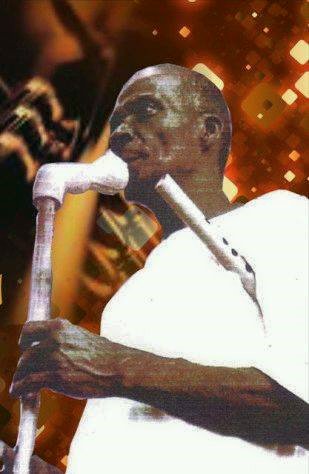
On looking at the life of Ephraim Amu, one does simply becomes confused and tapestry saddled with the most appropriate words to describe his achievements let alone to amply and satisfactorily describe his persona. It is in this complex wholeness of a master poet, a great orator, an inordinate cycling human; one of elegancy in the eyes oflinguistics and language; one of highly enriched African idiosyncratic masterfulness— the list would be a misfit to the nationalistic architect whose stretch of brain is beyond and is still beyond comprehension.
As a village boy, one who so desirously seek to see a renewal of such divineness, it is in the left spectacles of such great men; who believe that Africans are human and have lived on through time with their own unique philosophy and civilizations that the worth of this living revolves. Amu’s quest for an apex African understanding of his cultural worth is what “yen ara asase se ni” (this is our native land) which brings much reflection to my thoughts and affirmed beliefs in the African culture and all its associations. Looking back to a poem I wrote of which it wasn’t my doing, but the spiritual ancestral forces, “This is our land: Song of a native son”, I am of the believe that Ephraim Amu’s reincarnated soul was at work in me. Having compared it with his song, I have come to realise that not only did I know I was tapped on every moment through unseen stimuli to echo that same voice far and nigh. It is in the essence of some of these meritorious sacredness of voice that is so gloriously infused in the true Africans’ writings.
Just like the many paradoxical statements that nibbles and dries in the harmattan, I have said times without a punctuated numeration that Africa would not and never progress on any paradigm and gallant pathway unless her people have collectively without shreddedness of doubt fostered into their developmental epistles the essence of their culture(s). Ephraim Amu posits, “nothing would ever be a semblance to the original— whether copied, altered and modified would never fit where its original feature had been forged”. For me, whenever you stand to pray on the plentitude words of either Christianity, or Muhammadanism chastising the African ancestral eminence, you are not only being insensitive but a murderous son that would watch his father’s testicles get severed in the interest of making him an utopian impotent out of sheer envying of greyness and old age.
The life of Amu which has followed the marked traces of Aggrey of Anomabo, Brako of Akyemfo et al are what ought to be taught and infused into the fibre of our educational system, not the bleeding the gums of these colonial machineries that have always thwarted, sabotaged and played the xylophonic tunes of fooldomsies on our progress as a people. Whether it is by pleasure of words, by the turn of life, the truth must always guide out path and that truth can only be realised in the cultures of our Africanness. For me the life of Ephraim Amu would live and breath through history epoch and the ears of generations would hear what this great son of this land stood for.
This is a poem in memory of the man, who stood by the paws of the cat when he defended culture in the eyes of language and dress to the tune of his dismissal from the Presbyterian College when he was serving as a teacher…
“Brighter Than Self”
how often do we illuminate
our thoughts
in the eyes of truth
even when death
steals the purity
of our tears?
his was not for self
his was not for the winds
his a masterdom of believe
a believe that
culture could illuminate
and send humanity
on the transcendence
of conscience…
but how often
do lie in the pools
of our humanness
with thoughts
so potent for
nation?
He has paid his
Cause….
but a time would come
when we cannot be
reincarnated,
and posterity would
come seeking the tumor
in our souls
for we are locked sands
that won’t live
to see this
star anymore…
#NanaArhinTsiwah
#TheVillageThinkers
#AfricanismAndThe21stCenturyStruggle
#PoeticChromosome
 TONY TOKUNBO ETEKA FERNANDEZ